Well it's all going swimmingly after just a fortnight.
But who would have expected this?
 'Insufficient, inefficient and inconsistent': Addison Lee slams London's public charging network just weeks into using new electric taxis
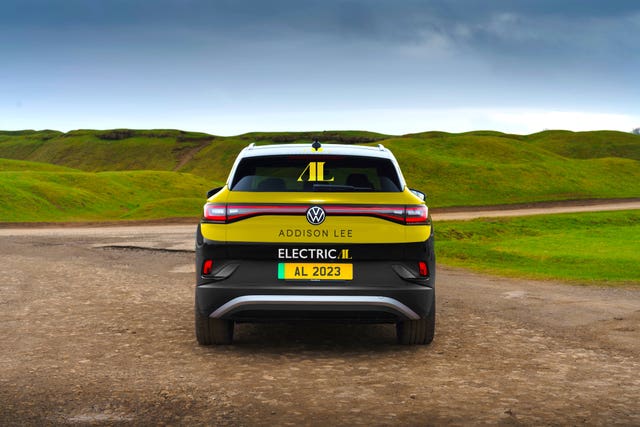
• Taxi firm started using 100 new VW ID.4 EVs in the capital since 22 November
• It plans to have a fully-electric fleet by 2023 with around 4,000 battery-only cars
• Addison Lee drivers have reported on a poor charging infrastructure in London
• After just two weeks using EVs, drivers revealed rapid chargers are difficult to find and more than half are out of order
Taxi giant Addison Lee has called for urgent investment in the public charging network after experiencing its first two weeks of using electric vehicles in London.
Bosses announced in September that the company will transition to a fully-electric taxi fleet by 2023, which started with the introduction of 100 zero-emission Volkswagen ID.4 SUVs in late November.
However, after just over a fortnight of using the plug-in vehicles, Addison Lee has provided a damning report on the public charging infrastructure in the capital.
It says the network 'shows insufficiency, inefficiency, and inconsistency' that will ultimately be a 'major barrier to successful industry-wide electrification'.
Addison Lee, London's largest private hire and taxi company, has said it will move away from combustion engine cars from this year, with plans to have a fleet of 4,000 electric vehicles providing transport services across the capital.
The transition, which will be completed seven years before the ban on sale of new petrol and diesel cars in the UK, is estimated to eventually remove 20,000 tonnes of CO2 from London’s roads each year and contribute to wider efforts to improve air pollution levels.
The first phase of this process began on Monday 22 November, with 100 VW ID.4s added to the fleet.
The version of VW's all-electric SUV used by Addison Lee is the larger 77kWh model, which has a maximum range of 322 miles, takes around seven and a half hours to fully charge from an AC three-phase 11 kW charge point, though a rapid device will take capacity from five per cent to 80 per cent in just 38 minutes.
However, just two weeks into using EVs in London, its drivers have reported 'key issues' with the charging network in the capital that threatens to derail appetite for the public and other businesses to ditch combustion-engine motors and make the switch to EVs.
According to a survey of its drivers using them, 93 per cent have not found rapid charging through the public network to be an easy process.
Its employees revealed that rapid chargers are often found to be broken or damaged (57 per cent), while over a third (37 per cent) said it takes them over 30 minutes to locate a rapid charger.
Our experience of our EV rollout so far has highlighted the huge infrastructure challenge we face as a city
Liam Griffin, Addison Lee CEO
It says the public network of devices will be relied upon by all private hire and taxi firms and well as normal drivers across the industry, though with just 600 rapid chargers currently in place the infrastructure is not up to scratch.
Transport for London has estimated that London will need almost 4,000 rapid EV charging points by 2030, though previous independent research shows that if London’s private hire vehicle and taxi fleets shift to full EVs then approximately 8,500 rapid chargers are required in the capital.
The Addison Lee report adds fuel to the calls for the nation's charging infrastructure to receive a surge in growth.
Earlier this month, the Society of Motoring Manufacturers and Traders stated that installations of public charging points is far behind the sale of electric vehicles, with only one device installed for every 52 EVs registered in 2021.
It says these early indications suggest there will be huge challenges for private hire and taxi firms looking to follow in its footsteps by moving to fully-electric fleets, as well as limit their attractiveness to members of the public currently considering to buy a battery-powered car.
The business says it is willing to share its data and learnings from its transition to help tackle the varying infrastructure challenges its drivers are facing.
Addison Lee’s CEO, Liam Griffin, said: 'By pledging to electrify by 2023 we are playing our part in reducing carbon emissions and improving air quality in the capital. But our commitment is not enough.
'To meet London’s 2030 net zero carbon target, every fleet operating in London needs to transition to electric as quickly as possible.
'To achieve this requires urgent investment in London’s public charging network. Our experience of our EV rollout so far has highlighted the huge infrastructure challenge we face as a city.
'Unless we can work together to fix this, we will never reduce carbon emissions to an acceptable level in the capital.'
[The full article is a lot longer than that above, but the rest of it is about the EV car market more generally. Worth a read if anyone is particularly interested, but don't have nightmares...]

 Login
Login Register
 FAQ
FAQ