Taxi Driver Online

UK cab trade debate and advice
It is currently Sat May 02, 2026 10:09 pm

All times are UTC [ DST ]


Post new topic Reply to topic  [ 5 posts ] 
Author Message
PostPosted: Mon May 08, 2023 6:18 pm 
Offline

Joined: Wed May 16, 2012 6:33 am
Posts: 18538
Assumed this was mainly about HCs from the headline, but it's actually about both codes :-o

Although most of the quotes are from the big PHV operators :?

I suppose the clue is in the word 'firms', which isn't so much one you would normally associate with the London HC trade, unless it was maybe a manufacturer, circuit or rental business, say.

Of course, the issues affect both sides of the trade, and obviously this kind of stuff is applicable the length and breadth of the land, more or less :x


London cabbies’ green ambitions slowed by poor EV charging set-up, warn taxi firms

https://www.cityam.com/london-cabbies-g ... axi-firms/

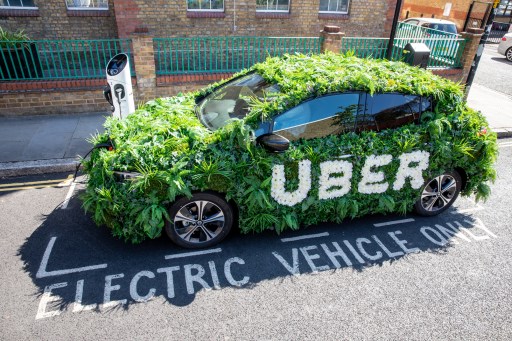
Image
Image: CPG Photography Ltd/City AM

Taxi firms have called for more action from government and City Hall to address failures in London’s EV charging infrastructure, which they argue is slowing the transition to electric fleets.

“There’s work to be done on infrastructure,” Liam Griffin, CEO of Addison Lee, told City A.M.

“When we signed up to this, there were all sorts of promises of the amount of chargers that will be available in London and they haven’t materialized in the way that we’ve been promised, so that has affected some of the drivers’ appetite to take on electric vehicles.”

EV taxi sales have surged since 2018, when TfL introduced guidance that all new cabs must be “zero emissions capable.” However, multiple groups contacted by City A.M. argued that problems with the current charging set-up are slowing the sector’s move towards greener vehicles.

Steve McNamara, general secretary of the Licensed Taxi Drivers Association (LTDA) said “the availability of public charging points, particularly rapid charging points for ‘on the go’ charging, is a big concern for taxi drivers as they need to know it’s viable to run an electric taxi commercially.”

He added: “without action from City Hall and Government, the shortage will become more acute and risks slowing down the record pace of investment we are seeing currently in our sector.”

Why are all the chargers in the richest boroughs?

Taxi firms told City A.M. that EV charge points are currently located in the most affluent areas of London and are often a significant distance from where cab drivers live, adding time and delay to their journeys.

“Drivers often tell me that accessing reliable charging near their homes is critical to their decision to switch to an electric vehicle,” Andrew Brem, Uber’s UK general manager, said. “The uncomfortable truth is that the richest boroughs in London currently have the best access to charging.”

Data from Uber and the taxi firm Freenow reveals that the most common areas London cabbies live are Tower Hamlets, Newham, Brent, Redbridge, Greenwich, Dartford and Barking and Dagenham.

None of these areas feature in the top five boroughs for EV chargers, which are Westminster, Kensington and Chelsea, Hammersmith and Fulham, Wandsworth, and Richmond, according to DfT data.

Mariusz Zabrocki, Freenow’s UK general manager, said that it is a “paradoxical situation,” in which those who have the most need for EV chargers are often the furthest away.

“We definitely need to increase the number of chargers together with increasing vehicles, but I would say that’s been happening. But what hasn’t happened is placing them where they’re needed.”

What do the drivers say?

Roberto Cancini, a 36-year-old Freenow driver from Wimbledon, said that reliable access to charge points would affect his decision to transition to an electric vehicle.

“I was thinking of switching to electric cars but I live in South-West, next to Wimbledon. I was looking for a charger… but I couldn’t spot any close by,” he said.

As the UK edges towards the 2030 EV mandate and taxi firms push for larger electric fleets, Cancini told City A.M. that the high costs associated with going electric, coupled with wider economic problems, have added to drivers’ fears of making the switch.

“Sometimes it is quite stressful when I start thinking about it, which car should I take, you know, are there going to be enough chargers.”

City Hall did not respond to a request for comment.


Top
 Profile  
 
PostPosted: Mon May 08, 2023 6:18 pm 
Offline

Joined: Wed May 16, 2012 6:33 am
Posts: 18538
Quote:
Data from Uber and the taxi firm Freenow reveals that the most common areas London cabbies live are Tower Hamlets, Newham, Brent, Redbridge, Greenwich, Dartford and Barking and Dagenham.

But would be interesting to drill that down and work out whether there's a difference between where HCDs and PHDs live. I'm willing to be there is :-o

Or at least I'm quite sure there will be a difference with regard to the value of the house they live in, say :?


Top
 Profile  
 
PostPosted: Mon May 08, 2023 8:18 pm 
Offline
User avatar

Joined: Sat Apr 01, 2006 11:47 pm
Posts: 20863
Location: Stamford Britains prettiest town till SKDC ruined it
seriously :roll: :-#

Image


Quote:
Why are all the chargers in the richest boroughs?


because they are the people who can afford EV's #-o

and most probably know a councillor who they can influence or are members of an organisation that has influence etc. etc.

what a stupid question :roll:

_________________
lack of modern legislation is the iceberg sinking the titanic of the transport sector


Top
 Profile  
 
PostPosted: Mon May 08, 2023 9:45 pm 
Offline
User avatar

Joined: Wed Sep 03, 2003 7:30 pm
Posts: 57356
Location: 1066 Country
StuartW wrote:
Quote:
Data from Uber and the taxi firm Freenow reveals that the most common areas London cabbies live are Tower Hamlets, Newham, Brent, Redbridge, Greenwich, Dartford and Barking and Dagenham.

But would be interesting to drill that down and work out whether there's a difference between where HCDs and PHDs live. I'm willing to be there is :-o

Or at least I'm quite sure there will be a difference with regard to the value of the house they live in, say :?

If I were to guess I would say the vast majority of black cab drivers live in the leafy suburbs or outside of the M25.

Doubt very much that applies to the minicab fleet.

However, if London can't get enough chargers, with all the money sloshing around there, then I doubt anywhere will within the next 10 years.

But it's not just the availability of chargers that's the problem, it's the exorbitant cost of charging on top of the huge initial outlay for the vehicles.

_________________
IDFIMH


Top
 Profile  
 
PostPosted: Thu May 11, 2023 1:33 pm 
Offline

Joined: Wed May 16, 2012 6:33 am
Posts: 18538
This was in the Times a day or two after City AM's article above, and it's along the same lines.

It's behind quite a tight paywall, and I'm not sure if this is the whole article, but you can get the gist by reading what's here, and it probably doesn't add a whole lot to the article above :?

Still worth a read, though.


Bumps in the road for plug-in taxis

A new law demands that London’s cabs go hybrid or electric. Drivers fear there aren’t enough charging points

The pandemic sent a shock wave through London’s taxi industry from which it has not recovered. As demand for their services collapsed, there are still a fifth fewer cabbies in the city than there were in March 2020.

Now the industry faces a new struggle. In the years since Covid, thousands of private hire and black cab drivers have switched to electric vehicles (EVs). Many more will have no option but to join them imminently, thanks to a new regulation brought in by Transport for London (TfL) at the beginning of the year. It requires all new cabs to be “zero-emissions capable”, meaning they must be hybrid or electric.

This regulation is an important milestone on the way to decarbonising London’s transport system and it is already having an impact: more than 40 per cent of private hire cars and black cabs in the city are now electric. However, it is causing problems for drivers, for whom finding a charging point is not always simple.

Many taxi drivers live in flats without private parking spaces or in houses without driveways. With nowhere to place their own charger, they have to rely on public ones. These are in short supply, are often occupied and are far from drivers’ homes. Faced with this difficulty, many cabbies are reluctant to switch to EVs.

TfL has made efforts to improve London’s public charging network, which already numbers 12,800 points. It is on track to meet its goal of expanding the network to between 40,000 and 60,000 chargers by 2030. However, Mariusz Zabrocki, UK general manager of the ride-hailing app Free Now, says: “We’re still quite a long way from drivers being comfortable that they can charge their vehicles as easily as they can refuel a combustion engine car.

“When you look at a map of charging [points] in London there are some areas that are really well covered, especially in central London. Then in areas where a lot of drivers live, such as Whitechapel and Wembley . . . you will see that we don’t have sufficient charging infrastructure there, and that needs to improve.”

Whitechapel, which is in the London borough of Tower Hamlets, has about 32 public charging points per 100,000 people, roughly a quarter of the London average of 131. The shortage of public chargers in such areas will only become more problematic as more drivers make the transition to electric. TfL estimates that by 2025, 80 per cent of all public charging demand in London will come from private hire.

“They are pushing us forward with EVs but the infrastructure is not there,” says John Hamilton, the driver of a hybrid black cab. “It’s as simple as that.”

But TfL defends the pace of change, saying that “toxic air in London is a public health emergency and the transition of [taxis] is significantly reducing toxic emissions and carbon dioxide, a major contributor to global warming.”

Another difficulty that many drivers face when going electric is the 20 per cent VAT levied on public chargers. By contrast, those who are able to charge their vehicles at home pay only 5 per cent. Zabrocki notes that this creates an extra expense for those who can’t access a charging point at home. “It’s a significant part of the price that really isn’t justified by the financial situation of the users,” he says.

The cost of switching to an EV in the first place is another issue. TfL offers drivers £7,500 if they trade in a vehicle that is less than 15 years old but, even with this scheme, a new cab will cost about £60,000. Most drivers require a loan with a financing plan to buy one, which pushes up the bill by thousands.

With those expenses in mind, Hamilton says TfL should be offering more generous incentives to help cabbies go electric, citing how drivers in Scotland receive more help. “The Scottish government looks after cabbies in that way. They can literally buy a brand new taxi and get a loan [for which] they don’t have to pay any interest.” Indeed, the Switched on Taxis Loan scheme, which was launched in Scotland in May 2019, provides drivers with an interest-free loan of up to £30,000 to purchase an electric car.

The loans are available through the Energy Saving Trust and funded by the Scottish government. The scheme is closed at present, but the trust is hopeful that it will reopen in the next few weeks after funding is approved.

Rafael Cancini, a private hire driver who does not own an EV, is concerned about the possible impact of London’s new regulation on the industry. “A lot of drivers will just try to find another job and leave [taxi driving],” he says, adding: “Customers will be faced with waiting times.”


Top
 Profile  
 
Display posts from previous:  Sort by  
Post new topic Reply to topic  [ 5 posts ] 

All times are UTC [ DST ]


Who is online

Users browsing this forum: No registered users and 963 guests


You cannot post new topics in this forum
You cannot reply to topics in this forum
You cannot edit your posts in this forum
You cannot delete your posts in this forum
You cannot post attachments in this forum

Jump to:  
cron
Powered by phpBB® Forum Software © phpBB Group