Comment piece in the Herald, which is kind of the Scottish equivalent of the Times, Telegraph or Guardian (and I don't mean in terms of politics - it's probably Guardian-esque in that regard).
Anyway, where to start with this?

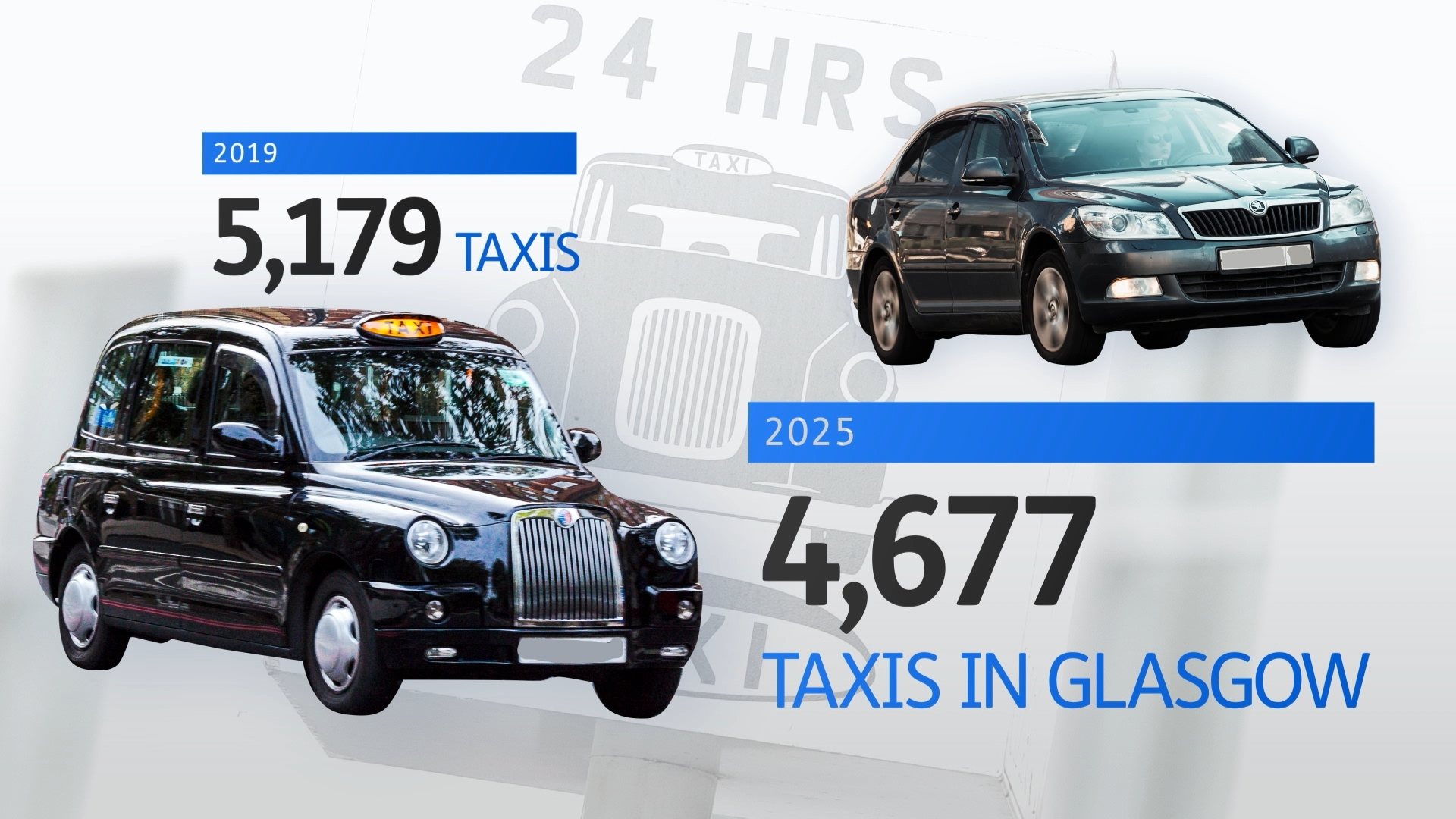
But the author has obviously been looking at that graphic on the STV News website at the weekend with the 'taxi' numbers
 https://news.stv.tv/wp-content/uploads/ ... 176246.jpgCan we fix the taxi problem in Glasgow before it’s too late?https://www.heraldscotland.com/politics ... sgow-late/Usually when I get in a taxi, I ask the driver clever questions off the top of my head, like “busy tonight?” or “when does your shift finish?” But lately I’ve been asking the drivers something a little bit different. I want to know what the future of their industry is. I want to know if we can fix the problem with taxis.
There’s a good chance you’ll have encountered the problem yourself, if you live in Glasgow. According to the records, there are 4,677 taxis in the city, which is 500 down on 2019. It means the chances of getting a cab when you need one are lower than they were and there are some who say it’s starting to change our behaviour. It’s called Taxi Anxiety: that nagging feeling that you won’t be able to get home. You think: why go into town when it’s so hard to get out of it again?
I have plenty of experiences like this; I’m sure you do too. For 15 years or so, my friend Michael and I have regularly met at Bar Gandolfi for a beer or two or three, and for the first 10 years or so, we would step outside at closing time and straight into a cab. More recently however, there’s usually no cab in sight so I’ve taken to walking home instead, which is about 30 minutes and a considerable downer on my blood-alcohol levels. It’s also left me, I must admit, with a slight case of Taxi Anxiety and a reluctance to go out unless I know for sure what the plans are for getting home.
You may be thinking at this point that the answer is Uber, but Uber comes with its own problems. For example: I ordered one on a rainy day from Pacific Quay to the CCA, a short trip across the river. It was £13 and when I asked – in the slightly confrontational manner taxi drivers must be used to by now – why it was so much, he told me it was because they have a dynamic pricing model and they charge more when they’re busy. It was raining. They were busy. So I was charged more. The charges if you’re not at the exact pick-up point at the exact time are also outrageous and I’ve been caught out a couple of times with that one. And so it’s often just more trouble than it’s worth. Cue another walk home.
It’s not just me who’s experiencing this by the way. I’ve been speaking to lots of publicans recently for a piece I’m doing for The Herald Magazine and quite a few of them have told me the taxi problem is changing people’s behaviour. One of them told me there was a time, not long ago, when he was crow-barring folk out at closing time, but now people are leaving at 10pm or earlier because they’re worried they won’t get a taxi home. It’s Taxi Anxiety again, and it’s contagious.
Obviously, this sort of thing has real economic consequences for businesses like pubs that rely on the night-time economy, although it’s not the only factor. I had a night-out in Edinburgh on a Sunday recently and it wasn’t til I got off the train at Queen Street that I remembered the underground shuts at 6pm on a Sunday; the public transport in the city is not good. Cost is also an issue: the taxi I eventually found that night cost me £12 for a journey of less than three miles. All of these factors, as well as the issue of the availability of cabs, are turning the screw on the city-centre economy.
It’s against all of this background that Glasgow City Council has ordered a review of the number of taxis that are eligible to operate in the city. The review opened to views from the public this week and the question being considered is whether the cap on black hackney taxis and private hires should be raised or scrapped. The current situation is that there’s 1,227 black cabs, which is under the cap of 1,420, and 3,450 private hires, which is right at the top of the cap. The idea doing the rounds is that removing the cap would free up more people to apply for licences, which would mean more taxis, and fewer walks home for Mark.
But a closer look at the figures reveals it’s not quite as simple as that, and the conversations I’ve had with black cab drivers in particular confirm it. Ask a black cab driver how things are and he (usually he) will tell you it’s much harder than it used to be; he’ll also tell you a lot of drivers are getting out of the business altogether because they can’t make it work, which is confirmed by the figures: the drop of 500 taxis since 2019 has been driven by drivers quitting their black cabs. And you can see it on the streets when you try and find one.
The concern the black cab drivers have, obviously, is that removing the cap will only make things worse for them by flooding the market with private hires and they’re probably right. It’s easier and cheaper to become an Uber driver than it is to take on a black cab, although working for companies like Uber is notoriously difficult and insecure; only the other day, the trade union behind a day of action said drivers working for Uber, Bolt and similar apps face working up to 70-80 hours to make ends meet.
But the figures in Glasgow tell their own story: in the past year, more than 680 applications for private hire licences were rejected because the cap has been reached and Uber’s argument is that turning these licences down is preventing people from tapping into new earning opportunities as well as keeping hundreds of taxis off the road at a time when they’re badly needed. Uber have also made the point that the Commonwealth Games is coming back to Glasgow next year which means a lot of people looking for a lot of taxis.
Whatever your view on how Uber treat their staff – the drivers deserve better pay and conditions – the logic of the company’s argument is strong. The vast majority of people working in the trade are opposed to lifting the cap and understandably so: lifting it will make things harder for them. But Glasgow is the only city in the UK still operating a cap, and protecting the drivers working in the sector has to be balanced against the damage being done to a service people rely on, and the damage being done to the city’s economy as a result. It makes the cap look, I’m sad to say, unsustainable.
Taxi drivers may tell me I don’t know what I’m talking about – not for the first time. But perhaps one way forward would be to raise the cap on private hires by, say, 500 and monitor the results for a year or two to see what happens. It may be that more people quit the business, which would be sad to see. It may be that the sector settles down after a while, as it has in other cities. And it may be, as logic dictates, that more taxis means a greater chance of finding one. Whatever the outcome, I think we all know that the current situation isn’t working. The lonely person out on the street looking for a taxi could tell you that.

 Login
Login Register
 FAQ
FAQ


](./images/smilies/eusa_wall.gif "Brick wall")