Oh Shock horror

 https://www.theargus.co.uk/news/23676634.taxis-wheelchair-users-brighton-falls-since-pandemic/
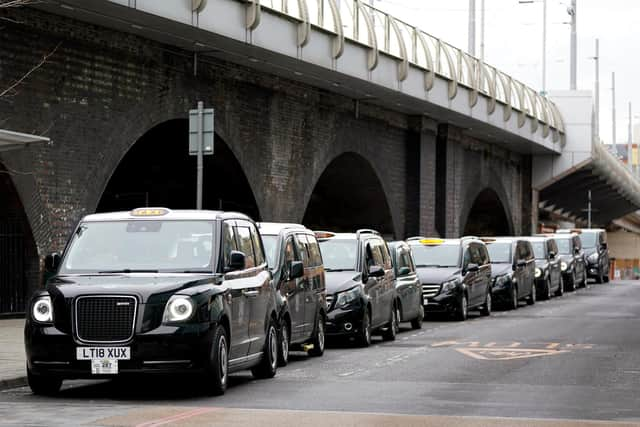
The number of city taxis suitable for wheelchair users is on the decline, with drivers leaving to deliver food instead.
Just 366 of the 966 taxis and private hire vehicles in Brighton and Hove are wheelchair accessible, down from 398 in March 2020.
Of the 595 taxis operated by Brighton and Hove City Council, 287 are wheelchair accessible, while just 79 of the city’s 371 private hire vehicles are suitable for wheelchair users.
Responding to the figures, chairman of the city council’s transport and sustainability committee Trevor Muten said he would “look into” increasing the numbers if there is a need to do so.
“It’s extremely important to us to have a mixed fleet of taxis to meet the needs of everyone in the city,” he said.
“I have a meeting today (July 25) with the Transport Partnership and I will raise the fact that the number of wheelchair accessible taxis has gone down and see what impact this is having and if there is anything that can be done.
“We have policies that encourage and, in some circumstances, mandate that wheelchair accessible vehicles (WAVs) must be provided.”
Cllr Muten said the levels of wheelchair accessible taxis and private hire vehicles is above the national average.
“But if there are not enough to meet people’s needs we will look at ways, with our partners, to rectify this.”
Meanwhile, David Lawrie, director of the National Private Hire and Taxi Association, said wheelchair-accessible vehicles are often too expensive for drivers to buy with accessible electric vehicles costing around £70,000.
“There is a massive drop in drivers and the reason for that is because of lack of government support through Covid,” said Mr Lawrie.
“Many drivers have gone into the courier business of food deliveries and they are not going to come back because of the pressure and the regulations on the industry.”
Brighton and Hove City Council requires taxi and private hire vehicle drivers to undergo disability awareness training before getting behind the wheel.
But a union says it is up to “big private hire companies” to support their drivers and wheelchair users alike.
James Farrar, general secretary of the App Drivers and Couriers Union, said: “Big operator firms have not set minimum availability requirements for their fleets, have not committed to minimum service standards and have not provided adequate pay or financial support for drivers to afford the premium cost of these vehicles.”
But a Department for Transport spokesman said: “While it's down to local authorities to manage wheelchair accessible vehicles in their fleet, the government is backing passengers with disability awareness training for drivers and bolstered laws, including fines, for those who fail to provide reasonable assistance.”
DfT figures show there were five taxis and private hire vehicles for every 1,000 people in England and Wales at the beginning of April.
Brighton and Hove has a lower rate with 3.5 per 1,000 people.

 Login
Login Register
 FAQ
FAQ