greenbadgecabby wrote:
The idea to make London a low emissions zone was made by Brussels opposed to the GLA.
So did Brussels say that all Taxis in London have to be of low emission by 2006? And why not the 40,000 private hire vehicles?
I was under the impression the London Low Emission Zone Feasibility Study conducted in 2003 which as you probably know is A Summary of the Phase 2 Report to the London Low Emission Zone Steering Group. Suggested that the low emission zone starts with a scheme that targets lorries, London buses and coaches, simply because these vehicles have disproportionately high emissions per vehicle. It also stated that in later years the zone could potentially be extended to include Vans and Taxis?
The report mentioned the LEZ's could not be implemented before 2006, which in effect is now.
I don't keep track of what goes on in London but as far as I am aware there is no EU legislation that says Taxi emissions have to be lower than that of a normal car? I suspect an LTI vehicle doesn't meet the emision standard of a normal car?
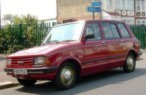
So could the reason for this implementation be down to LTI and the vehicles they produce? I must admit their poor emission performance was highlighted in the recent study we discussed on TDO, the main problem is obviously their diesel engine?
My personal opinion is that rather than blame the EU who I must admit do have targets for 2010 contained in directive 96/62/EC, the LEZ in respect of Taxis is solely down to Mr Livingstone and LTI for their chity engines?
Air quality Directive (96/62/EC)
Objective
The objective of the Directive is to improve air quality throughout Europe by controlling the level of certain pollutants and monitoring their concentrations. In particular the Directive aims to establish levels for different air pollutants; draw up common methods for assessing air quality; methods to improve air quality; and make sure that information on air quality is easily accessible to Member States and the public.
Background
According to the Directive, the European Parliament and the Council must lay down limit values and alert thresholds (see "Related Acts") for the following pollutants: sulphur dioxide, nitrogen dioxide and oxides of nitrogen, particulate matter and lead; benzene and carbon monoxide; ozone; polycyclic aromatic hydrocarbons (PAH), cadmium, arsenic, nickel and mercury.
So called "Daughter" Directives have followed to lay down limits for other pollutants.
Implementation
Member States are responsible for the implementation of the Directive. Ambient air quality must be monitored throughout the territory of the Member States. Different methods may be used for this: measuring, mathematical modeling, a combination of the two, or estimates. This must happen in built-up areas with more than 250 000 inhabitants, or in areas where concentrations are close to the limit values.
If the limit values are exceeded Member States must come up with a programme for getting them back to a set limit within a deadline. The programme, which must be made available to the public, must contain information on the location where the pollution is excessive; the nature, and an assessment, of the pollution; and the origin of the pollution. The must also be sent any relevant information (recorded pollution level, duration of the alert, etc.). Geographical areas which have pollution levels below the limit values must remain that way, and it is up to Member States to ensure this.
Most of the information and directives can be downloaded from here.
http://europa.eu.int/comm/environment/air/ambient.htm
Just for the record.
Transport and Air Quality Strategy Revisions: London Low Emission Zone – Draft for Public and Stakeholder Consultation - 30 February 2006
Preamble
On behalf of the Mayor, Transport for London (TfL) is consulting the public and stakeholders on draft revisions to the Mayor’s Transport and Air Quality Strategies.
This preamble is not part of the proposed Revision text. The proposed revisions seek to take forward
the Mayor’s proposal, made in his 2004 election manifesto, which, subject to consultation, was to designate the whole of Greater London a Low Emission Zone (LEZ).
The Mayor has a statutory duty to take steps towards achieving Government air quality objectives (and EU limit values) for seven locally managed pollutants in London. The objectives of the proposed LEZ are two-fold:
• to move London closer to achieving the air quality objectives (and EU limit values) for 2010, in support of the Government’s Air Quality Strategy
(AQS) and the EU’s Air Quality Framework and Daughter Directives; and
• to improve the health and quality of life of people who live and work in
London, through improving air quality. The LEZ would seek to achieve this by deterring the most polluting dieselengined vehicles from the Greater London area. From 2008 the LEZ would target Heavy Goods Vehicles (HGVs), buses and coaches based on their emission standards. The LEZ could be expanded to cover diesel-engined Light Goods Vehicles (LGVs) in 2010, subject to further analysis.
It is proposed to insert new sections 4G.126 – 4G.198 and new Proposals 4G.27, 4G.28, 4G.29 and 4G.30 in the Transport Strategy. It is also proposed to replace existing sections 4C.1 – 4C.35 and Proposal 10 of the Air Quality Strategy with new sections 4C.1 – 4C.73, and add new Proposals 10, 11, 12 and 13.
The same text is proposed for both strategies to ensure they are consistent. No other sections of either strategy are being updated, and all the remaining policies and proposals still apply.
These revisions also take into account the policies, proposals and objectives of the Mayor’s other statutory and non-statutory strategies, published since the original Transport and Air Quality Strategies were published in July 2001 and September 2002 respectively. Copies of all the Mayor’s strategies are available from the Greater London Authority (GLA) and on the GLA website at
www.london.gov.uk. Copies of the strategies should also be available to view at all main public libraries in Greater London.
Regards
JD

 Login
Login Register
 FAQ
FAQ